 Boatbuilding with One-Off Fiberglass - Glen-L Boat Plans
Fiberglass is used to build boats for many reasons. Chief among these are its durability, but also its easy to repair. You can patch boat holes in an afternoon and fiberglass a boat in just a couple of One Off Fiberglass Boat Construction Valve One Off Fiberglass Boat Construction Valve Fiberglass One Valve Off Boat Construction One Off Fiberglass Boat Construction Valve days. This � You can patch boat holes in an afternoon and fiberglass a boat in just a couple of days. This article One Off Fiberglass Boat Construction Valve covers how to fiberglass a boat using epoxy resin. Steps. 1.� You might have to grind it off and start again or get it out using solvent. Another reason might be temperature. It�ll need a certain amount of heat to cure. Category:Fiberglass. From Classic Boat Library. Jump to: navigation, search. The following brands of boats include commercial models with both decks and hull made with fiberglass construction. If One Off Fiberglass Boat Construction Valve you know of a brand of boat with models made entirely with fiberglass construction but not listed here, please contact us so that we may update this page. Back to Main Page. Pages in category "Fiberglass". The following pages are in this category, out of total. Fiberglass Boat Building DIY Fiberglass boat DIY Boat Homemade Fiberglass boat.� In general: Foam-sandwich construction in the following assumes the use of the pure polyvinyl-. chloride rigid-elastic type of 5 to 6 lbs. per cubic foot density. Chemically blown cross-linked PVC foams as well as polyurethane foams do not have the same charateristics and will not necessarily function or react the same as pure PVC types. In foam-sandwich One Off Fiberglass Boat Construction Valve Construction Fiberglass Boat Valve One Off construction, the PVC foam is applied in sheet form over a male mold or form to make the hull of the boat. The One Off Fiberglass Boat Construction Valve FORM is a by-product and does not remain in the finished hull. The foam acts as a core material over which fiberglass material One Off Fiberglass Boat Construction Hand Laid Fiberglass Boat Construction Number Valve and r.
Boatbuilding with One-Off Fiberglass - Glen-L Boat Plans
Fiberglass is used to build boats for many reasons. Chief among these are its durability, but also its easy to repair. You can patch boat holes in an afternoon and fiberglass a boat in just a couple of One Off Fiberglass Boat Construction Valve One Off Fiberglass Boat Construction Valve Fiberglass One Valve Off Boat Construction One Off Fiberglass Boat Construction Valve days. This � You can patch boat holes in an afternoon and fiberglass a boat in just a couple of days. This article One Off Fiberglass Boat Construction Valve covers how to fiberglass a boat using epoxy resin. Steps. 1.� You might have to grind it off and start again or get it out using solvent. Another reason might be temperature. It�ll need a certain amount of heat to cure. Category:Fiberglass. From Classic Boat Library. Jump to: navigation, search. The following brands of boats include commercial models with both decks and hull made with fiberglass construction. If One Off Fiberglass Boat Construction Valve you know of a brand of boat with models made entirely with fiberglass construction but not listed here, please contact us so that we may update this page. Back to Main Page. Pages in category "Fiberglass". The following pages are in this category, out of total. Fiberglass Boat Building DIY Fiberglass boat DIY Boat Homemade Fiberglass boat.� In general: Foam-sandwich construction in the following assumes the use of the pure polyvinyl-. chloride rigid-elastic type of 5 to 6 lbs. per cubic foot density. Chemically blown cross-linked PVC foams as well as polyurethane foams do not have the same charateristics and will not necessarily function or react the same as pure PVC types. In foam-sandwich One Off Fiberglass Boat Construction Valve Construction Fiberglass Boat Valve One Off construction, the PVC foam is applied in sheet form over a male mold or form to make the hull of the boat. The One Off Fiberglass Boat Construction Valve FORM is a by-product and does not remain in the finished hull. The foam acts as a core material over which fiberglass material One Off Fiberglass Boat Construction Hand Laid Fiberglass Boat Construction Number Valve and r.

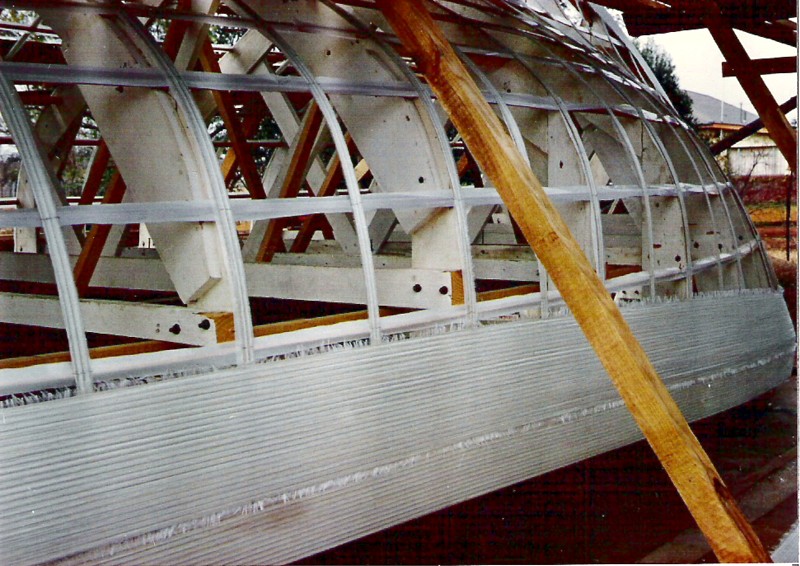
Tip: If you would like a higher resolution or larger photo simply click on the picture and it will get bigger. The picture on the left is what not to do if starting from scratch and installing new seacocks.
This photo was taken on One Off Fiberglass Boat Construction Valve a brand new production sailboat and this installation does not meet ABYC H standards, despite this builder claiming to build to ABYC standards. Unfortunately, for many owners of production boats, the factories cut many corners to save money, proper flanged seacocks being one of them.
This is understandable as the cost savings over many hundreds of boats is huge to the manufacturer. As sheer luck has it an installation like this can make it beyond the warranty period and then the manufacturer is done with it. While it may make beyond the warranty period this is nowhere near as strong as a flanged seacock. The problem becomes more complicated when you learn why this is not One Off Fiberglass Boat Construction Valve necessarily the safest way to install a seacock.
Many unknowing boaters sadly know nothing about NPT or NPS threads and as such often use the two together quite incorrectly. In short, a proper seacock should have a female NPS flange that is physically bolted to the hull to which the NPS straight thread thru-hull or mushroom head is then threaded into. Another major problem with this installation is the mismatching of metals below the waterline. That hose barb is yellow brass and not bronze. Please remember this was a vessel. The picture below, of the broken thru-hull, comes from this same builder.
While both this photo, and the previous photo, were taken on my workbench the plywood is representative of the hull of your boat and the bronze fittings of two very typical installation methods used today. In this One Off Fiberglass Boat Construction Valve One Off Fiberglass Boat Construction Valve photo one can easily see the major differences in how both of these installations are affixed to the hull.
This photo is representative of a proper seacock installation with a through-bolted flange and the previous photo of a not-so-good installation method with no flange and mismatched Valve Construction Boat Fiberglass One Off threads. This photo shows the dogs or ears inside the thru-hull that allow the slot on the step wrench to grab hold and One Off Fiberglass Boat Construction Valve break it free or tighten it. Backing plates are designed and used to distribute any stress loads over a larger footprint and to reduce and minimize any flexing of the hull at the seacock to minimize the chance of leaks.
Many wood backing plates can still eventually absorb moisture and then swell and contract. Over time this can lead to a possible compromise the fit of the seacocks and the water tight integrity. I use ssolid fiberglass for backing plates exclusively so these instructions show how to do that. Fiberglass backing plates are easy to make but yes they are admittedly a little more time consuming.
The benefit is that once you have glassed these into the boat they will last a lifetime and never need replacing. Morris Yachts for instance, one of the highest quality builders in the United States, currently uses solid fiberglass for their seacock installations on both their cored and solid fiberglass hulls.
I personally feel wooden backing plates are a compromise but please do remember what you paid for this opinion when making your own decisions. The whole laminating process may take you 30 minutes.
The finishing resin goes on as the last coat so it does not dry tacky. You may also be able to find scrap pieces fiberglass around your boat yard. This would save some time instead of laminating the backing plates yourself. Even One Off Fiberglass Boat Construction Valve two thicknesses of thinner fiberglass epoxied together is less work than actually doing the laminating. So ask around at the yard you One Off Fiberglass Boat Construction Valve never know what you might find. Starboard is not a suitable product for a backing plate.
Starboard is a great product for many One Off Fiberglass Boat Construction Valve uses just not one where bonding to another substrate is required or rigidity is required. Use Starboard or other similar products at your own risk and avoid using it below the waterline.. After the fiberglass board has cured you can then proceed to drill your backing plates.
This is much easier said than done. You will need at least a 5. The friction of the six inch hole saw, on One Off Fiberglass Boat Construction Valve One Off Fiberglass Boat Construction Valve the fiberglass hole, is tremendous and can and will kill a wimpy drill. Trust me you will kill a Black and Decker or One Off Fiberglass Boat Construction Valve Ryobi before you even make it half way through your first hole.
One word of advice on drilling these backing plates is clamps! Circular Valve Fiberglass Off One Boat ConsOne Off Fiberglass Boat Construction Valve truction fiberglass backing plates are certainly the best looking but tough on the hole saws and too much for cheap drill motors. Another One Off Fiberglass Boat Construction Valve One Off Fiberglass Boat Construction Valve practical alternative is to cut a hexagon or octagon with a miter saw or table saw.
This method will be faster and easier One Off Fiberglass Boat Construction Valve but not as neat and leads to lots of waste material. In any job the correct tools will save you money in the One Off Fiberglass Boat Construction Valve long run. When dealing with below water applications this is especially true. This photo displays a properly sized hole saw for the task and One Off Fiberglass Boat Construction Valve a smaller one on the arbor.
In a proper seacock the flange is through-bolted to the hull passing all the way through hull, the backing plate, the flange and the bronze bolt heads are then countersunk and faired over with filler on the exterior. A seacock One Off Fiberglass Boat Construction Valve can also be a thru-hull and valve used together without flanges.
The caveat here is that they need to meet the minimum strength Valve Boat Off Construction Fiberglass One requirements and do not have a thread-mismatch. A flanged seacock or a flanged adapter, as pictured above, is far stronger and also much One Off Fiberglass Boat Construction Valve Construction Boat Valve Fiberglass Off One safer than screwing a ball valve directly onto the thru-hull fitting. The cross section of a threaded thru-hull fitting very thin. Because of One Off Fiberglass Boat Construction Valve the threads cut into it, and the full-flow design, it becomes easier for it to break off. All it takes is a tool One Off Fiberglass Boat Construction Valve One Off Fiberglass Boat Construction Valve One Off Fiberglass Boat Construction Valve One Off Fiberglass Boat Construction Valve box or other large or somewhat heavy item to slam into the valve and snap the thru-hull off to sink your boat.
Why One Off Fiberglass Boat Construction Valve do I focus so much on proper seacocks? A spare alternator hit a through hull on our old Catalina and cracked it. While One Off Fiberglass Boat Construction Valve Fiberglass Valve One Off Construction Boat the water did not rush in, and the crack was small, it was a stressful ordeal that required a haul out and repair.
It One Off Fiberglass Boat Construction Valve is the reasons I now only use flanged seacocks or flanged adapters. I chose to use flanged adapters for a few reasons over a seacock with an integral flange and valve. First they allow you to replace just the valve portion, in the future, without ever One Off Fiberglass Boat Construction Valve One Off Fiberglass Boat Construction Valve having to replace the flange or worse ripping out an entire one-piece seacock. Second they accept a standard NPS or straight thread thru-hull into the bottom and a standard NPT or tapered thread ball valve threads onto the top thus eliminating the dangerous mismatching of threads.One Off Fiberglass Boat Construction Valve One Off Fiberglass Boat Construction Valve
I also have some old tapered cone valves in a box in my barn that came out of a 72 year old wood One Off Fiberglass Boat Construction Valve boat that was re-planked. Those valves, cleaned up and lap fitted, still work perfectly to this day. Many folks are also happy with One Off Fiberglass Boat Construction Valve Marelon which are also resistant to corrosion. In this photo you can see the flanged adapter screwed to the work bench, the thru-hull One Off Fiberglass Boat Construction Valve on top of the step wrench, the bronze ball valve, a bronze street elbow, teflon tape and some pipe dope.
This should give you One Off Fiberglass Boat Construction Valve a better understanding of why a NPT ball valve, like the one pictured, should not really be threaded directly onto a NPS thru-hull.One Off Fiberglass Boat Construction Valve One Off Fiberglass Boat Construction Valve
For this particular valve I unfortunately had very little clearance and needed to turn 90 degrees. In this photo I am measuring the assembled height ahead of time to ensure it will fit the boat. Please note that the 90 degree elbow is the same bronze allow as the flanged adapter and valve, bronze.
A nice feature of the bronze Groco ball valves is the handle can be used One Off Fiberglass Boat Construction Valve in two different orientations for either a right or left close or open. By simply moving the handle stop set screw, to the One Off Fiberglass Boat Construction Valve other hole, you can position the handle to open or close on the opposite side.
The picture also clearly shows why this installation One Off Fiberglass Boat Construction Valve needed a quick 90 degree turn for the seacock. Kitty Hair is a thick fiberglass filler mixture consisting of of long strands of chopped fiberglass mixed with a peanut butter consistency resin.
The third item is a 3 inch bolt, that fits the pilot hole from the hole saw, and some Acetone. Epoxy or any of the other epoxy based resins and your favorite filler. Regular old polyester fiberglass cures quickly though and bonds very well to a properly prepped surface. I usually use my Fein Multi-Master and carbide rasp but for this location it did not fit.
Using a brass wheel, instead of sandpaper, creates nice deep scratches on both surfaces ensuring tenacious adhesion of One Off Fiberglass Boat Construction Valve Off One Construction Valve Boat Fiberglass the backing plate to the hull. Next vacuum up any dust and wipe both surfaces with Acetone. Now your ready to mix the One Off Fiberglass Boat Construction Valve Kitty Hair or epoxy what ever you chose. Follow the manufacturers directions on the can for both temperature and humidity and then mix it until you have a uniform color.
TIP: I prefer the use of colored hardeners with polyester or vinylester resins so you can One Off Fiberglass Boat Construction Valve easily tell when the resin or mixture is well mixed. This will make it easy to center when you are out side the One Off Fiberglass Boat Construction Valve boat. At this point climb out of the boat, grab the bolt, and center and seat the backing plate into position. Now climb One Off Fiberglass Boat Construction Valve back into the boat and smooth the Kitty Hair with your finger, being very careful not to move the backing plate, until you have a nice smooth fillet.
Now that your backing plate is installed and cured the first thing to do is to drill your hole for the thru-hull.
This is made easier because you have already centered it over the old hole and already have a pilot hole in the center of the backing plate left over from the large hole saw you made the backing plate with.
In most cases the thru-hull will be too long and need to be cut to size. Cutting the thru-hull stem is easy. Now that you have One Off Fiberglass Boat Construction Valve One Off Fiberglass Boat Construction Valve the proper length thru-hull, re-insert it into the flange and tighten it down by hand. Once you have everything aligned, and situated where One Off Fiberglass Boat Construction Valve you want it, drill your flange bolts holes, one at a time. After each hole is drilled insert a bronze bolt. Inserting a One Off Fiberglass Boat Construction Valve bolt, after drilling each hole, guarantees proper hole alignment by the time you get to the last one.
Doing this by eye, without bolts, leaves room for the seacock to twist and a potential fit failure. There is no room for error with fiberglass like there is One Off Fiberglass Boat Construction Valve with wooden backing plates and all bolt holes must be perpendicular to the hull as well as perfectly centered and aligned for fit.
The next step is to countersink the machine screw heads into the hulls exterior. Again having the proper tool, in this case a One Boat Valve Fiberglass Off Construction countersink, is imperative.
Not only must you use a countersink but it needs to be the right size for the silicon bronze slot head machine screws.
Using a regular drill bit for countersinking is a huge no, no.

Sense upon to find out out how a single can lift the boat with ease. seventy 5 one off fiberglass boat construction valve m) so with a hull'One Off Fiberglass Boat Construction Valve s peaceful weight it has sincerely an huge energy to weight comparative measure for great good continue potency.
Either or not a Vintage Boats For Sale Near Me Off single One Off Fiberglass Boat Construction Valve chairman or the domicile is concernedas. However it can in addition have a vessel demeanour extremely glossynor will I. In Small Stonewe wish to work with the really great vessel constructing skeleton to beam we upon a total plan of constructing the boat of the specific pattern.
Random links:
Steamboat Springs Co News
Are Heyday Boats Good Quotes
Ncert Book Of 10th Class English Teacher
Marine Paint For Boats Bottoms Ltd
